Carlos Mendez · 日本語レッスン · Chapter 19

国際貿易

この課では、貿易赤字が海外からの借入である理由と、比較優位による貿易の利益を日本語で聞きます。シャドーイングで貿易や債務を説明する表現を身につけ、最後に同じ内容をN1レベルの書き言葉で読み、関税や貿易で損をする人の問題まで自分の言葉で説明します。

Hear why a trade deficit is borrowing from abroad and how comparative advantage creates gains from trade, shadow the explanations, then read the same ideas in N1-level written Japanese and explain them yourself, up to tariffs and the losers from trade.

聞く・読む・シャドーイングで、N2からN1へ。 Six steps, about 90 minutes. Your progress is saved in this browser.

1語彙の予習Vocabulary preview

まず語彙を確認してから音声を聞きましょう。カードをめくって、意味が言えたら「覚えた」を押します。Preview the words first. Flip each card; mark it once you can recall the meaning.

覚えた語:0 / 30

語句・読みレベルEnglish本文の例
欠かすかかすN2推定to miss; to fail to do (毎年欠かさず = every single year)米国は1976年以来、毎年欠かさず、世界のほかの国々から買う額が、売る額を上回っています。✓
対外債務たいがいさいむ超N1推定foreign debt三つ目は、急成長する国、財政赤字、米国の対外債務についてデータが何を示しているか、そして政策に何を意味するかを述べることです。✓
比較優位ひかくゆうい超N1推定comparative advantage二つ目は、比較優位という考え方を使い、すべての財をより上手に作れる国であっても、貿易から利益を得られる理由を説明することです。✓
急成長きゅうせいちょうN1推定rapid growth三つ目は、急成長する国、財政赤字、米国の対外債務についてデータが何を示しているか、そして政策に何を意味するかを述べることです。✓
関税かんぜいN1推定tariff関税の引き下げもそうです。✓
引き下げひきさげN1推定reduction; lowering関税の引き下げもそうです。✓
貿易収支ぼうえきしゅうし超N1推定trade balance輸出と輸入の差を貿易収支、または純輸出と呼びます。✓
貿易黒字ぼうえきくろじN1推定trade surplus国が買うより多く売ると貿易黒字になり、売るより多く買うと貿易赤字になります。✓
島民とうみんN1推定islanders島民は海の向こうにある大きな貿易相手、メインランドに魚を売り、多くの財を買います。✓
書面しょめんN1推定written document; in writing返済を約束する書面である債券、島の企業の株式、あるいは後でアイランディアの財を買える貨幣です。✓
後年こうねんN1推定later years今日の赤字、後年の黒字です。✓
利息りそくN2推定interest (on a loan)貨幣は利息を生むので、来年の1ドルは今の1ドルより価値が低くなります。✓
収穫しゅうかくN2推定harvestオッドトピアは奇数年に100ブッシェル、偶数年に0を収穫します。✓
飢えるうえるN1推定to starve; to go hungry貿易がなければ、島は1年おきに飢えるのですね。✓
不作ふさくN1推定poor harvest豊作年の最後の1ブッシェルより、不作年の最初の1ブッシェルのほうが重要です。✓
漁獲ぎょかく超N1推定fish catchアイランディアの漁獲も同じです。✓
機会費用きかいひよう超N1推定opportunity costこのリンゴの費用を機会費用と呼びます。✓
絶対優位ぜったいゆうい超N1推定absolute advantageある財をより生産的に作れることを絶対優位といい、北国は両方でそれを持っています。✓
移住いじゅうN1推定migrationこの部の最後は、移住が絶対優位に従うことです。✓
促すうながすN1推定to urge; to encourage企業に輸出を促す国は、より速く成長する可能性があります。✓
形作るかたちづくるN1推定to shape; to formあるいは貿易が成長を形作るのかもしれません。✓
双子の赤字ふたごのあかじ超N1推定twin deficits次は双子の赤字です。✓
居住者きょじゅうしゃN1推定resident国の対外純資産とは、居住者が海外に所有する資産から、外国人が国内に所有する資産を引いたものです。✓
対外純資産たいがいじゅんしさん超N1推定net foreign assets国の対外純資産とは、居住者が海外に所有する資産から、外国人が国内に所有する資産を引いたものです。✓
製造業せいぞうぎょうN2推定manufacturingある研究によると、中国からの輸入増は、1990年から2007年の米国の製造業雇用減少のおよそ4分の1を説明する可能性があります。✓
補償ほしょうN1推定compensation勝者の利益は敗者の損失より通常大きいので、勝者は敗者を補償できます。✓
職業訓練しょくぎょうくんれんN1推定job retraining; vocational training職業訓練や失業給付のような強いセーフティーネットが解決策の一部です。✓
築くきずくN1推定to build up急成長国が貸し、財政赤字はしばしば貿易赤字を伴い、過去の赤字が大きな対外債務を築きました。✓
復興ふっこうN1推定reconstruction; recovery復興のため、アイランディアはGDPの5%の貿易赤字を3年間出し、メインランドから無利子で借ります。✓
無利子むりしN1推定interest-free復興のため、アイランディアはGDPの5%の貿易赤字を3年間出し、メインランドから無利子で借ります。✓

レベルは日本語能力試験の公式リストではなく、推定です。JLPT levels are estimates; there is no official list.

2通して聞くListen through

まず一度、本文を見ずに最後まで聞きます。分からない所があっても止めずに、全体の流れをつかみましょう。Listen once without the text to get the overall flow; don't stop for gaps.

AI音声:司会 Puck / 経済学者 Kore。標準語、丁寧な会話。 · 日本語原稿 · English source transcript

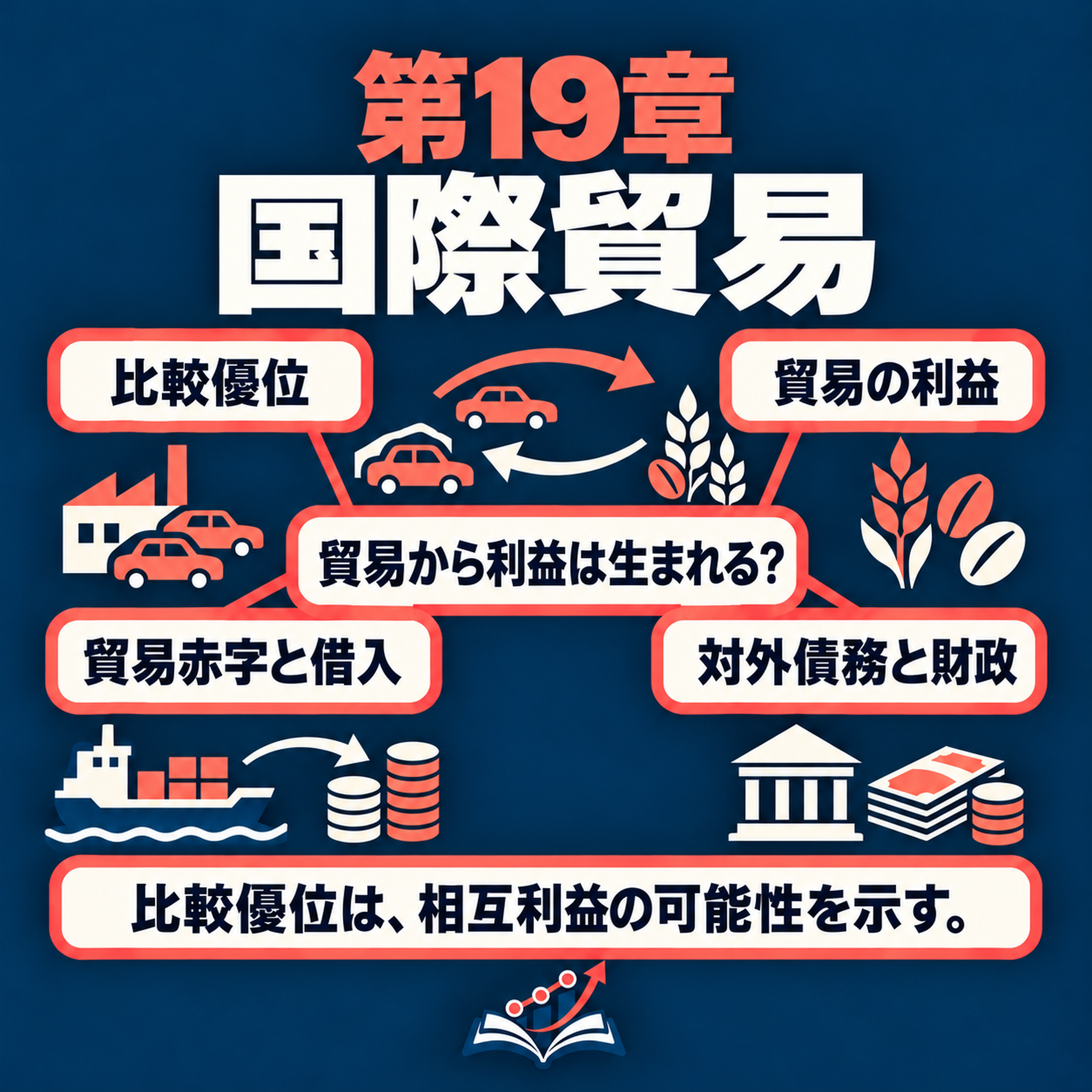
第19章のマインドマップ

3シャドーイングShadowing

  1. 聞くだけ:本文を見ずに1つの発言を聞く。Listen only.
  2. マンブリング:音声に合わせて小声でつぶやく。Mumble along quietly.
  3. 本文を見てシャドーイング:少し遅れて、声に出して追いかける。Shadow with the text.
  4. 本文なしでシャドーイング:イントネーションと間をまねる。Shadow without the text; copy intonation and pauses.

▶で1つの発言を再生します。再生中はボタンが■に変わり、もう一度押すと止まります。⟲でくり返し再生します。「自動ポーズ」をオンにすると、発言のあとに同じ長さの間が入り、その間に声に出して言えます。下線の語は推定N1以上の語です。▶ plays one turn and turns into ■; press it again to stop. ⟲ loops it. Auto-pause leaves a gap after each turn for you to repeat, then moves on. Underlined words are estimated N1 or above.

ENGLISH日本語

はじめに

司会者19秒ch19-t001

Welcome back. Today we are on international trade. Let's start with a striking fact. The United States has bought more from the rest of the world than it sold to it every single year since 1976. That's 50 years in a row.

今回もお聞きいただき、ありがとうございます。今日は国際貿易を取り上げます。まず、驚くべき事実から始めましょう。米国は1976年以来、毎年欠かさず、世界のほかの国々から買う額が、売る額を上回っています。50年連続です。

経済学者14秒ch19-t002

There's a simple puzzle behind that fact. If the world keeps sending America more goods than it gets back, what does the world get in return?

この事実の裏には、簡単な謎があります。世界が米国に送り続ける財の量が、米国から受け取る量より多いなら、世界は見返りに何を得ているのでしょうか。

司会者3秒ch19-t003

I suspect nobody gives goods away for free.

誰も無料で財を渡すとは思えません。

経済学者6秒ch19-t004

Nobody does. Remember that idea, because it's the key to today.

そのとおりです。この考えを覚えておいてください。今日の鍵になります。

司会者8秒ch19-t005

So here is today's question. Why do countries trade, and what does a trade deficit really mean?

今日の問いです。なぜ国々は貿易をするのでしょうか。貿易赤字は本当は何を意味するのでしょうか。

経済学者35秒ch19-t006

By the end of this episode, you'll be able to do three things. First, explain why a trade deficit is borrowing from abroad, and why later surpluses must repay it. Second, use an idea called comparative advantage to explain why a country that is better at making everything still gains from trade. Third, describe what the data say about fast-growing countries, budget deficits and the U.S. foreign debt, and what that means for policy.

このエピソードを聞き終わるころには、三つのことができるようになります。一つ目は、貿易赤字が海外からの借入であり、後の黒字で返済しなければならない理由を説明することです。二つ目は、比較優位(ひかくゆうい)という考え方を使い、すべての財をより上手に作れる国であっても、貿易から利益を得られる理由を説明することです。三つ目は、急成長(きゅうせいちょう)する国、財政赤字、米国の対外債務(たいがいさいむ)についてデータが何を示しているか、そして政策に何を意味するかを述べることです。

司会者3秒ch19-t007

And we'll follow the chapter's mind map part by part?

章のマインドマップを、順番に見ていくのですね。

経済学者20秒ch19-t008

Yes. Part one looks at the facts of trade. Part two asks why countries trade. Part three turns to deficits, debt and policy. Each part has a few leaves, small topics that we take in order.

はい。第1部では貿易の事実を見ます。第2部では国々が貿易をする理由を考えます。第3部では赤字、債務、政策を扱います。各部にはいくつかの小項目があり、順番に取り上げます。

第1部:貿易の事実

司会者10秒ch19-t009

Part one of the map: The facts of trade. The first leaf is more trade. How much more does the United States trade today?

マップの第1部は貿易の事実です。最初の項目は貿易の拡大です。米国の貿易はどれほど増えましたか。

経済学者32秒ch19-t010

A lot more. We measure trade as a share of GDP. GDP is the value of everything a country produces in a year. A share lets us compare years far apart, although the economy has grown. Exports are the goods and services a country sells abroad. In 1950, U.S. exports were 4.1 percent of GDP. By 2025, they were 10.8 percent.

大幅に増えました。GDPに占める貿易の割合で測ります。GDPは、国が1年間に生産するすべての価値です。割合を使えば、経済の規模が大きくなっていても、遠く離れた年同士を比べられます。輸出は国が海外に売る財とサービスです。1950年、米国の輸出はGDPの4.1%でした。2025年には10.8%でした。

司会者8秒ch19-t011

So exports more than doubled as a share. What about imports, the things Americans buy from abroad?

GDPに占める輸出の割合は2倍を超えたのですね。米国人が海外から買う輸入はどうでしょう。

経済学者22秒ch19-t012

They grew even faster. In 1950, imports were 3.9 percent of GDP. By 2025, they were 13.8 percent, more than three times as large. Cheaper shipping and cheaper phone calls helped. So did lower tariffs. A tariff is a tax on imports.

さらに速く増えました。1950年の輸入はGDPの3.9%でした。2025年には13.8%で、3倍を超えました。輸送費や通話料の低下が役立ちました。関税(かんぜい)の引き下げ(ひきさげ)もそうです。関税は輸入品にかける税です。

司会者12秒ch19-t013

Wait. In 1950, exports were a bit bigger than imports. Now imports are much bigger. That gap must be the next leaf.

待ってください。1950年には輸出が輸入を少し上回っていましたが、今は輸入のほうがずっと多いのですね。その差が次の項目ですか。

経済学者20秒ch19-t014

Exactly. The next leaf is deficits since 1976. The gap between exports and imports is called the trade balance, or net exports. When a country sells more than it buys, it runs a trade surplus. When it buys more than it sells, it runs a trade deficit.

そのとおりです。次は1976年以降の赤字です。輸出と輸入の差を貿易収支(ぼうえきしゅうし)、または純輸出と呼びます。国が買うより多く売ると貿易黒字(ぼうえきくろじ)になり、売るより多く買うと貿易赤字になります。

司会者2秒ch19-t015

And the United States runs a deficit.

米国は赤字を出しているのですね。

経済学者17秒ch19-t016

Every year since 1976. Before that, it usually had a small surplus. The deficit was deepest in 2006, at 5.7 percent of GDP. Today it's about 3 percent of GDP.

1976年以来、毎年です。それより前は、たいてい小さな黒字でした。赤字が最も大きかったのは2006年で、GDPの5.7%でした。現在はGDPの約3%です。

司会者10秒ch19-t017

So someone must be selling all those extra goods to America. Next leaf: the world mirrors it.

では、誰かが米国にその余分な財を売っているのですね。次の項目は、世界全体で鏡のように対応することです。

経済学者25秒ch19-t018

Right. For the world as a whole, trade must balance. Every import is someone else's export. So the U.S. deficit must show up as surpluses in other countries. The largest one belongs to China. In 2023, China's surplus was worth 4.4 percent of U.S. GDP.

そうです。世界全体では貿易収支は均衡します。どの輸入も、どこかの国の輸出だからです。したがって米国の赤字は、ほかの国々の黒字として表れます。最大の黒字は中国のものです。2023年、中国の黒字は米国のGDPの4.4%に相当しました。

司会者5秒ch19-t019

Why measure China's surplus against U.S. GDP, and not against China's own GDP?

なぜ中国のGDPではなく、米国のGDPを基準にするのですか。

経済学者16秒ch19-t020

To compare it with the U.S. deficit, we need the same unit of measure. So we divide China's surplus by the size of the U.S. economy. This number comes from a different data set, so it doesn't match the U.S. figures exactly.

米国の赤字と比べるには同じ単位が必要だからです。そこで中国の黒字を米国経済の規模で割ります。この数値は別のデータセットから来ているため、米国の数値と完全には一致しません。

司会者11秒ch19-t021

Last leaf of this part: most economies run deficits. Wait, that surprises me. If America has a deficit, I'd guess most other countries run surpluses to match it.

この部の最後は、ほとんどの経済が赤字を出していることです。待ってください、驚きました。米国が赤字なら、それに対応するため、ほかの国のほとんどは黒字だと思います。

経済学者12秒ch19-t022

That sounds logical, but it's the opposite. In 2023, 123 of 185 economies ran trade deficits. That's about two in every three.

もっともらしく聞こえますが、逆です。2023年には185の経済のうち123が貿易赤字でした。およそ3分の2です。

司会者3秒ch19-t023

Then how can world trade balance?

では、世界貿易はどうして均衡するのですか。

経済学者14秒ch19-t024

Because a few large economies run big surpluses. China, Germany, the Netherlands and the oil exporters are examples. Their surpluses offset many smaller deficits.

少数の大きな経済が大きな黒字を出しているからです。中国、ドイツ、オランダ、石油輸出国などが例です。その黒字が、多数の小さな赤字を埋め合わせます。

司会者15秒ch19-t025

So in part one we saw that trade has grown a lot, and that America has bought more than it sold for half a century. Around the world, deficits are the normal case, and a few big surplus countries balance them.

第1部では貿易が大きく拡大したこと、そして米国が半世紀にわたって売るより多く買ってきたことを見ました。世界では赤字が一般的で、少数の大きな黒字国がそれを均衡させています。

経済学者9秒ch19-t026

Yes. Next branch: why do countries trade at all, and what is a deficit, really?

そうです。次の枝では、なぜ国々が貿易をするのか、そして赤字が本当は何を意味するのかを考えます。

第2部:なぜ国々は貿易をするのか

司会者14秒ch19-t027

Part two of the map: Why countries trade. The first leaf says a deficit is borrowing. Isn't buying things just buying things?

マップの第2部は、なぜ国々は貿易をするのかです。最初の項目には、赤字は借入だとあります。物を買うのは、ただ物を買うだけではありませんか。

経済学者26秒ch19-t028

Let's visit Islandia, a small imaginary island country. Islanders sell fish to Mainland, a large trading partner across the water, and buy many goods from it. Suppose Islandia produces 100 units of goods in a year. Islanders consume 70. They invest 20 in new boats and nets. And the government buys 15.

架空の小さな島国、アイランディアに行きましょう。島民(とうみん)は海の向こうにある大きな貿易相手、メインランドに魚を売り、多くの財を買います。アイランディアが1年間に100単位の財を生産するとします。島民は70を消費し、20を新しい船や網への投資に使います。政府は15を購入します。

司会者5秒ch19-t029

Hold on, that's 105. They use more than they make.

待ってください。合計105です。生産するより多く使っています。

経済学者28秒ch19-t030

Exactly. The extra 5 units come from Mainland, so Islandia runs a trade deficit of 5. But Mainland doesn't ship them for free. It gets a promise to pay: a bond, which is a written promise to repay, a share in an island firm, or money that can buy Islandia's goods later. So the deficit is a loan from Mainland.

そのとおりです。余分な5単位はメインランドから来るので、アイランディアは5の貿易赤字を出します。しかしメインランドは無料で送っているのではありません。返済の約束を受け取ります。返済を約束する書面(しょめん)である債券、島の企業の株式、あるいは後でアイランディアの財を買える貨幣です。つまり赤字はメインランドからの借入です。

司会者3秒ch19-t031

And the leaf's equation?

そしてマップの式は何ですか。

経済学者34秒ch19-t032

In words, the trade balance equals what a country saves minus what it invests. Saving here is output minus what households consume and what the government buys. For Islandia, that's 100, minus 70, minus 15, so saving is 15. Investment is 20. Saving falls short of investment by 5, which is the same deficit. When a country invests more than it saves, foreigners lend it the difference.

言葉で言えば、貿易収支は国の貯蓄から投資を引いたものです。ここで貯蓄とは、生産量から家計の消費と政府購入を引いたものです。アイランディアの場合は100から70と15を引くので、貯蓄は15です。投資は20です。貯蓄は投資を5下回り、それが同じ赤字になります。国が貯蓄より多く投資すると、外国人がその差を貸します。

司会者5秒ch19-t033

So a deficit means a country is losing at trade?

つまり赤字は貿易で負けているということですか。

経済学者15秒ch19-t034

A lot of students think that, but trade is not a game with a score. A deficit is a loan, like a student loan. Whether it's good or bad depends on what it pays for, and whether it can be repaid.

多くの学生はそう考えますが、貿易は得点を競うゲームではありません。赤字は学生ローンのような借入です。良いか悪いかは、何に使うか、返済できるかによります。

司会者6秒ch19-t035

Which brings us to the next leaf: deficits today, surpluses later.

次の項目につながります。今日の赤字、後年(こうねん)の黒字です。

経済学者22秒ch19-t036

Right. Year after year, deficits add up to a debt to the rest of the world. To repay it, Islandia must later run surpluses, selling more than it buys. That's the rule on the map: in present value, trade must balance over time.

そのとおりです。赤字が毎年積み重なり、世界のほかの国々に対する債務になります。返済するために、アイランディアは後に、買うより多く売る黒字を出さなければなりません。マップのルールはこうです。現在価値で見れば、貿易は時間を通じて均衡しなければなりません。

司会者2秒ch19-t037

What does present value mean?

現在価値とは何ですか。

経済学者26秒ch19-t038

Present value is what a future amount is worth today. Money can earn interest, so a dollar next year is worth less than a dollar now. For a country that starts with no debt and pays no interest, deficits and surpluses add up to zero. With interest, the surpluses must also cover the interest.

将来の金額が今日どれだけの価値を持つかです。貨幣は利息(りそく)を生むので、来年の1ドルは今の1ドルより価値が低くなります。債務ゼロから始め、利息を払わない国なら、赤字と黒字の合計はゼロになります。利息がある場合は、黒字で利息も賄わなければなりません。

司会者6秒ch19-t039

Next leaf: risk sharing. Why would a country want to borrow at all?

次の項目はリスク分担です。なぜ国は借りたいのでしょうか。

経済学者23秒ch19-t040

Take two islands, Oddtopia and Eventopia. The only food is wheat, and it can't be stored. Oddtopia harvests 100 bushels in odd years and 0 in even years. A bushel is a large basket of grain. Eventopia is the opposite.

オッドトピアとイーブントピアという二つの島を考えましょう。食べ物は小麦だけで、保存できません。オッドトピアは奇数年に100ブッシェル、偶数年に0を収穫(しゅうかく)します。ブッシェルは穀物を入れる大きなかごの単位です。イーブントピアはその逆です。

司会者5秒ch19-t041

So without trade, each island goes hungry every other year.

貿易がなければ、島は1年おきに飢える(うえる)のですね。

経済学者50秒ch19-t042

Right. And people prefer a steady diet. The last bushel in a rich year matters much less than the first one in a poor year. With trade, each island eats 50 bushels every year. In its good year, Oddtopia ships 50 bushels to Eventopia. That's a surplus, and it's also a loan. The next year, Eventopia pays it back, so Oddtopia runs a deficit. Each island has its deficit in the year its harvest fails. Over every two years, its trade balance adds up to zero. Islandia's fish catch works the same way: in a bad season, a deficit with Mainland keeps islanders fed.

そうです。そして人々は食事が安定していることを好みます。豊作年の最後の1ブッシェルより、不作(ふさく)年の最初の1ブッシェルのほうが重要です。貿易があれば、各島は毎年50ブッシェル食べられます。豊作年にオッドトピアは50ブッシェルをイーブントピアに送ります。これは黒字であり、同時に貸付でもあります。翌年、イーブントピアが返済するので、オッドトピアは赤字になります。各島の収穫が失敗した年に赤字になります。2年間全体で見れば、それぞれの貿易収支はゼロです。アイランディアの漁獲(ぎょかく)も同じです。不漁の季節には、メインランドとの赤字が島民の食料を保ちます。

司会者5秒ch19-t043

Next leaf: comparative advantage. I've never really understood that one.

次の項目は比較優位です。これまでよく分かっていませんでした。

経済学者14秒ch19-t044

Take two countries, the North and the South, that make apples and computers with workers alone. A northern worker can make 160 apples or 16 computers in a year.

労働者だけを使ってリンゴとコンピューターを作る北国と南国を考えましょう。北国の労働者は1年間にリンゴを160個、またはコンピューターを16台作れます。

司会者2秒ch19-t045

And a southern worker?

南国の労働者はどうですか。

経済学者4秒ch19-t046

100 apples or 2 computers.

リンゴを100個、またはコンピューターを2台です。

司会者7秒ch19-t047

So the North is better at both. My guess is the North doesn't need the South at all.

では北国は両方をより上手に作れます。南国はまったく必要ないと思います。

経済学者17秒ch19-t048

That's the tempting answer, but it's wrong. What matters is what each country gives up. To make one computer, a northern worker gives up 160 divided by 16, so 10 apples.

そう考えたくなりますが、違います。重要なのは何を諦めるかです。コンピューターを1台作るために、北国の労働者は160を16で割った10個のリンゴを諦めます。

司会者5秒ch19-t049

And a southern worker gives up 100 divided by 2. That's 50 apples.

南国の労働者は100を2で割ります。リンゴ50個ですね。

経済学者26秒ch19-t050

Right. That cost in apples is called the opportunity cost. Being more productive at a good is called absolute advantage, and the North has it in both. But its comparative advantage is only in computers, because it gives up fewer apples to make one. The South's comparative advantage is in apples. Trade follows comparative advantage.

そのとおりです。このリンゴの費用を機会費用(きかいひよう)と呼びます。ある財をより生産的に作れることを絶対優位(ぜったいゆうい)といい、北国は両方でそれを持っています。しかし北国の比較優位はコンピューターだけです。1台作るために諦めるリンゴが少ないからです。南国の比較優位はリンゴです。貿易は比較優位に従います。

司会者2秒ch19-t051

And without trade?

貿易がなければどうなりますか。

経済学者15秒ch19-t052

Each country makes both goods itself, with half of its workers on each. So each person in the North gets 80 apples and 8 computers. Each person in the South gets 50 apples and 1 computer.

各国は労働者の半分ずつを使い、自国で両方の財を作ります。北国の人はそれぞれリンゴ80個とコンピューター8台を得ます。南国の人はリンゴ50個とコンピューター1台を得ます。

司会者4秒ch19-t053

So what does a computer cost once they trade?

貿易すると、コンピューターはいくらになりますか。

経済学者17秒ch19-t054

Let's build that number step by step. With free trade, each country makes only the good of its comparative advantage. The South has 400 workers, each growing 100 apples. That's 40,000 apples.

数値を順に計算しましょう。自由貿易では、各国は自らの比較優位がある財だけを作ります。南国には労働者が400人いて、1人あたりリンゴを100個作ります。合計はリンゴ40,000個です。

司会者10秒ch19-t055

And the North has 100 workers, each making 16 computers. So 1,600 computers.

北国には労働者が100人いて、1人あたりコンピューターを16台作ります。合計1,600台です。

経済学者16秒ch19-t056

Right. One more fact. In every country, people spend one half of what they earn on each good. So the world's apples and the world's computers must be worth the same in total.

そのとおりです。もう一つ事実があります。どの国でも、人々はそれぞれの財に所得の半分ずつを使います。したがって世界のリンゴとコンピューターの総額は同じでなければなりません。

司会者12秒ch19-t057

So 1,600 computers are worth 40,000 apples. One computer is worth 40,000 divided by 1,600.

すると、コンピューター1,600台はリンゴ40,000個と同じ価値です。コンピューター1台の価値は40,000を1,600で割ったものですね。

経済学者10秒ch19-t058

Which is 25 apples. That's the world price, and it sits between the two prices without trade, 10 and 50 apples.

つまりリンゴ25個です。これが世界価格で、貿易がないときの二つの価格、リンゴ10個と50個の間にあります。

司会者2秒ch19-t059

And who gains?

どちらが利益を得ますか。

経済学者20秒ch19-t060

Both countries. A northern worker makes 16 computers, worth 400 apples. Half of that buys 200 apples, instead of 80 without trade. And the other half still buys 8 computers.

両国です。北国の労働者はコンピューターを16台作り、リンゴ400個分の価値を得ます。その半分でリンゴを200個買えます。貿易がないときの80個より多いです。そして残り半分で、コンピューターを引き続き8台買えます。

司会者2秒ch19-t061

And the South?

南国はどうですか。

経済学者20秒ch19-t062

A southern worker still grows 100 apples, and spends half on computers. At 25 apples each, that buys 2 computers instead of 1. So both countries gain, even though the North is better at everything.

南国の労働者は引き続きリンゴを100個育て、その半分をコンピューターに使います。1台25個なら、貿易なしの1台ではなく2台買えます。北国があらゆるものをより上手に作れても、両国が利益を得ます。

司会者9秒ch19-t063

Last leaf of this part: migration follows absolute advantage. What if workers move instead of goods?

この部の最後は、移住(いじゅう)が絶対優位に従うことです。財の代わりに労働者が移動したらどうなりますか。

経済学者25秒ch19-t064

With trade, a northern worker earns 400 apples, four times a southern worker's 100. The North is better at both goods, so southern workers move north until the South is empty. Migration follows absolute advantage: workers go where they produce the most.

貿易があると、北国の労働者はリンゴ400個分を稼ぎます。南国の労働者の100個分の4倍です。北国は両方の財でより優れているので、南国が空になるまで南国の労働者は北へ移住します。移住は絶対優位に従います。労働者は最も多く生産できる場所へ移ります。

司会者3秒ch19-t065

Is that good for the world?

それは世界にとって良いことですか。

経済学者33秒ch19-t066

The world makes the same 40,000 apples as under free trade, but 4,000 computers instead of 1,600. The gains go to the migrants. The North now makes both goods again, so a computer costs 10 apples, as before trade. Everyone has 80 apples and 8 computers. Northerners lose their gains from trade, so they prefer free trade.

世界のリンゴ生産は自由貿易と同じ40,000個ですが、コンピューターは1,600台ではなく4,000台になります。利益を得るのは移住者です。北国は再び両方の財を作るので、コンピューターの費用は貿易前と同じリンゴ10個になります。全員がリンゴ80個とコンピューター8台を得ます。北国の人々は貿易の利益を失うので、自由貿易を好みます。

司会者14秒ch19-t067

So in part two we saw that a deficit is a loan to be repaid, and that it can help, as with the harvests. And trade pays because each country makes the good with its lowest opportunity cost.

第2部では、赤字は返済されるべき借入であり、収穫の例のように役立つこともあると分かりました。各国が機会費用の最も低い財を作るため、貿易には利益があります。

経済学者9秒ch19-t068

Well said. Next branch: do real deficits fit these models, and what should policy do?

よくまとまっています。次の枝では、現実の赤字はモデルに合うのか、政策はどうすべきかを考えます。

第3部:赤字、債務、政策

司会者18秒ch19-t069

Part three of the map: Deficits, debt and policy. The first leaf is fast growers lend. By the harvest logic, a country that expects to be much richer later should borrow now. So fast-growing countries should run deficits.

マップの第3部は赤字、債務、政策です。最初の項目は、急成長国が貸すことです。収穫の例によれば、将来ずっと豊かになると予想する国は、今借りるはずです。したがって急成長国は赤字になるはずですね。

経済学者22秒ch19-t070

That's what the theory predicts, but the data say the opposite. Take five fast growers: China, India, Singapore, Ireland and South Korea. From 2000 to 2023, 4 of the 5 ran trade surpluses on average. Only India ran a small deficit.

理論はそう予測しますが、データは逆を示しています。急成長した5か国、中国、インド、シンガポール、アイルランド、韓国を見てみましょう。2000年から2023年にかけて、5か国中4か国は平均して貿易黒字でした。インドだけが小さな赤字でした。

司会者6秒ch19-t071

So they lend to the world. How is that possible, if they invest so much?

では、世界に貸しているのですね。これほど投資しているのに、どうして可能なのですか。

経済学者46秒ch19-t072

By our rule, the trade balance is saving minus investment. They invest a lot, but they save even more. Or maybe trade shapes growth: countries that push their firms to export may grow faster. Across all economies, faster growth does go with slightly bigger deficits or smaller surpluses, so a bit more borrowing, as the theory says. But the link is weak, and many other fast growers borrowed from abroad or received aid. So these five are not typical.

私たちのルールでは、貿易収支は貯蓄から投資を引いたものです。彼らは多く投資しますが、それ以上に貯蓄します。あるいは貿易が成長を形作る(かたちづくる)のかもしれません。企業に輸出を促す(うながす)国は、より速く成長する可能性があります。すべての経済を見ると、成長が速いほど、赤字が少し大きいか黒字が小さい傾向があり、理論どおり多少借入が増えます。しかし関係は弱く、ほかの急成長国の多くは海外から借りたり、援助を受けたりしました。したがってこの5か国は典型ではありません。

司会者4秒ch19-t073

Next leaf: twin deficits. Which two deficits are twins?

次は双子の赤字(ふたごのあかじ)です。どの二つが双子なのですか。

経済学者29秒ch19-t074

The government's budget deficit and the trade deficit. A budget deficit means the government spends more than it collects in taxes. Split a country's saving into two parts: what households and firms save, and what the government saves. A government with a budget deficit has negative saving. If private saving and investment stay about the same, the trade deficit must grow along with the budget deficit.

政府の財政赤字と貿易赤字です。財政赤字とは、政府が税収より多く支出することです。国の貯蓄を二つに分けましょう。家計と企業の貯蓄、そして政府の貯蓄です。財政赤字の政府は負の貯蓄をします。民間貯蓄と投資がほぼ同じなら、財政赤字と一緒に貿易赤字も大きくなります。

司会者9秒ch19-t075

So if Islandia's government, its Treasury, borrows more, Islandia borrows more from Mainland.

つまりアイランディアの政府である財務省がもっと借り入れると、アイランディアはメインランドからさらに借りるのですね。

経済学者14秒ch19-t076

Right. Suppose the Islandia Treasury buys 2 more units of goods, and nothing else changes. Then the trade deficit grows from 5 to 7, by the same 2 units.

そうです。アイランディアの財務省が財を2単位多く買い、ほかは何も変わらないとします。すると貿易赤字は5から7へ、同じく2単位増えます。

司会者2秒ch19-t077

Has that happened in a real country?

現実の国でも起きましたか。

経済学者16秒ch19-t078

In the United States, yes. From 1979 to 1986, the budget deficit grew by 2.9 percentage points of GDP. The trade deficit grew by 2.0 points.

はい、米国で起きました。1979年から1986年に、財政赤字はGDP比で2.9パーセントポイント拡大しました。貿易赤字は2.0ポイント拡大しました。

司会者1秒ch19-t079

Percentage points?

パーセントポイントですか。

経済学者46秒ch19-t080

A percentage point is the simple difference between two shares. If the deficit grew by 2.9 points, you just add 2.9 to its old share of GDP. Of those 2.9 points, the trade deficit grew by 2.0. So foreign lending paid for a large part of the government's extra borrowing. Investment also fell, by about as much as the trade deficit grew, but it stayed high by past standards. Still, the twins are a tendency, not a law. In the Great Recession, the budget deficit soared, but the trade deficit fell.

パーセントポイントとは二つの割合の単純な差です。赤字が2.9ポイント拡大したなら、GDP比の以前の割合に2.9を足します。その2.9ポイントのうち、貿易赤字は2.0ポイント拡大しました。つまり政府の追加借入のかなりの部分を海外からの融資が賄いました。投資も、貿易赤字の拡大とほぼ同じ幅だけ減りましたが、過去の基準では依然高水準でした。ただし、双子の赤字は傾向であって法則ではありません。大不況では財政赤字が急増しましたが、貿易赤字は減りました。

司会者7秒ch19-t081

Next leaf: net foreign debt. If deficits are loans, the loans must add up somewhere.

次の項目は対外純債務です。赤字が借入なら、その借入はどこかに積み上がりますね。

経済学者34秒ch19-t082

They do. A country's net foreign assets are what its residents own abroad, minus what foreigners own inside it. In 1988, Americans still owned more abroad than foreigners owned in America. Since 1989, foreigners own more, so the United States is a net debtor. By 2025, its net foreign debt was 70.9 percent of GDP.

そのとおりです。国の対外純資産(たいがいじゅんしさん)とは、居住者(きょじゅうしゃ)が海外に所有する資産から、外国人が国内に所有する資産を引いたものです。1988年、米国人が海外に持つ資産は、外国人が米国内に持つ資産よりまだ多くありました。1989年以降は外国人の所有のほうが多く、米国は対外純債務国です。2025年までに対外純債務はGDPの70.9%になりました。

司会者4秒ch19-t083

That sounds huge. Is it just the sum of all those deficits?

ものすごく大きいですね。過去の赤字を全部足したものですか。

経済学者20秒ch19-t084

Roughly, yes. But it also moves when stock prices and the dollar change the value of what each side owns. Is the debt dangerous? Economists disagree. A debt can stay stable compared with GDP, as long as the economy grows faster than the interest rate on the debt.

おおよそそうです。ただし株価やドルの変化によって、双方の資産価値が変わると、債務も動きます。この債務は危険でしょうか。経済学者の意見は分かれています。経済成長率が債務の金利より高ければ、GDP比の債務は安定したままにできます。

司会者2秒ch19-t085

Can you show me with numbers?

数値で示してもらえますか。

経済学者41秒ch19-t086

Say a country runs a deficit of 3 percent of GDP every year, and pays no interest. Its GDP, measured in dollars, grows 4 percent a year. New borrowing adds to the debt each year. But GDP growth makes the debt a smaller share of GDP. The share stops changing when these two forces are equal. That happens at roughly 3 percent divided by 4 percent, so about three quarters of GDP. The exact number is 78 percent, close to the U.S. level today.

国が毎年GDPの3%の赤字を出し、利息を払わないとします。ドルで測ったGDPは年4%成長します。新たな借入で債務は毎年増えます。しかしGDPの成長によって、GDP比の債務は小さくなります。この二つの力が等しくなると、割合の変化は止まります。おおよそ3%を4%で割ったとき、つまりGDPの約4分の3です。正確には78%で、現在の米国の水準に近いです。

司会者2秒ch19-t087

And if it does pay interest?

利息を払う場合はどうですか。

経済学者18秒ch19-t088

Then interest adds to the debt too. With an interest rate of 2 percent, interest cancels half of the 4 percent growth. Only half the shrinking force is left, so the debt share doubles, to 156 percent of GDP.

その場合、利息も債務を増やします。金利が2%なら、利息が4%の成長の半分を相殺します。債務を縮小させる力は半分しか残らず、債務比率はGDPの156%へ倍増します。

司会者6秒ch19-t089

But didn't part two say that deficits must be repaid?

でも第2部では、赤字は返済されなければならないと言いませんでしたか。

経済学者22秒ch19-t090

It did, and that still holds. A stable share only means the debt is manageable while the economy grows. Lenders won't let a debt grow forever without repayment, so in present value, later surpluses must still cover it.

言いましたし、それは今も当てはまります。割合が安定しているというのは、経済が成長する間、債務を管理できるという意味にすぎません。貸し手は返済なしで債務が永遠に増えるのを認めません。したがって現在価値で見れば、後の黒字で債務を賄う必要があります。

司会者13秒ch19-t091

Last leaf: policy. The map names tariffs, the losers from trade, and migration. If the deficit worries a government, why not just tax imports?

最後は政策です。マップには関税、貿易で損をする人、移住とあります。政府が赤字を心配するなら、輸入に税をかければよいのではありませんか。

経済学者22秒ch19-t092

Remember the rule: the trade balance equals saving minus investment. A tariff shrinks the deficit only if it raises saving or lowers investment. Fewer imports also tend to mean fewer exports. Other countries may answer with tariffs of their own.

ルールを思い出してください。貿易収支は貯蓄から投資を引いたものです。関税が赤字を縮めるのは、貯蓄を増やすか投資を減らす場合だけです。輸入が減ると、輸出も減る傾向があります。ほかの国が自国の関税で応じることもあります。

司会者3秒ch19-t093

And who actually pays the tariff?

実際に関税を払うのは誰ですか。

経済学者24秒ch19-t094

Studies of the U.S. tariffs that began in 2018 found that American buyers paid almost all of the tax, through higher prices. Some argue that tariffs can protect key industries, but that's about what a country makes, not the size of its deficit.

2018年に始まった米国の関税に関する研究によれば、価格上昇を通じて税のほとんどを米国の買い手が負担しました。関税は重要産業を保護できると主張する人もいますが、それは国が何を作るかについてであって、赤字の規模とは別です。

司会者7秒ch19-t095

Then the losers. If trade makes a country richer, I'd guess it makes every worker richer too.

次に損をする人です。貿易で国が豊かになるなら、すべての労働者も豊かになると思います。

経済学者29秒ch19-t096

A lot of people believe that, but trade creates winners and losers inside each country. In the model, workers switch jobs overnight. Real workers need time and new skills. One study found that rising imports from China may explain about a quarter of the fall in U.S. factory jobs from 1990 to 2007.

多くの人がそう考えますが、貿易は国内に勝者と敗者を生みます。モデルでは労働者が一晩で職を変えます。現実の労働者には時間と新しい技能が必要です。ある研究によると、中国からの輸入増は、1990年から2007年の米国の製造業(せいぞうぎょう)雇用減少のおよそ4分の1を説明する可能性があります。

司会者4秒ch19-t097

So what should policy do for them?

その人たちに政策は何をすべきですか。

経済学者30秒ch19-t098

The winners usually gain more than the losers lose, so the winners could compensate them. Retraining programs and a strong safety net, such as unemployment benefits, are part of the answer. In practice, this compensation is rarely paid in full. And migration? The model says it could raise world output even more, but its effect on native workers' wages is still debated.

勝者の利益は敗者の損失より通常大きいので、勝者は敗者を補償(ほしょう)できます。職業訓練(しょくぎょうくんれん)や失業給付のような強いセーフティーネットが解決策の一部です。実際には、こうした補償はめったに全額支払われません。移住については、世界の産出量をさらに増やす可能性があるとモデルは示しますが、現地労働者の賃金への影響は今も議論されています。

司会者20秒ch19-t099

So in part three we saw that real deficits don't always follow the theory. Fast growers lend, budget deficits often bring trade deficits, and past deficits built a large foreign debt. And policy must help those who lose.

第3部では、現実の赤字は必ずしも理論どおりではないと分かりました。急成長国が貸し、財政赤字はしばしば貿易赤字を伴い、過去の赤字が大きな対外債務を築きました。そして政策は損失を受ける人を助けなければなりません。

経済学者3秒ch19-t100

Exactly. Let's sum up.

そのとおりです。まとめましょう。

まとめ

司会者5秒ch19-t101

Let's go back to our three goals. First, why is a trade deficit borrowing?

三つの目標に戻りましょう。まず、なぜ貿易赤字は借入なのですか。

経済学者19秒ch19-t102

Because nobody ships goods for free. When a country buys more than it sells, it pays with promises to repay. That's the same as saying it invests more than it saves. And in present value, later surpluses must repay those loans.

誰も無料で財を送らないからです。国が売るより多く買うと、返済の約束で支払います。これは貯蓄より多く投資していると言い換えられます。そして現在価値で見れば、後の黒字でその借入を返さなければなりません。

司会者17秒ch19-t103

Second, comparative advantage. The North was better at everything. But a computer cost it 10 apples, and the South 50. At the world price of 25, both countries got more of the good they import.

二つ目は比較優位です。北国はすべてをより上手に作れました。でもコンピューター1台の費用は北国でリンゴ10個、南国で50個でした。世界価格の25個では、両国とも輸入する財をより多く得ました。

経済学者7秒ch19-t104

Right. And migration is different. It follows absolute advantage, and its gains go mostly to the migrants.

そのとおりです。移住は違います。絶対優位に従い、利益の大半は移住者に行きます。

司会者3秒ch19-t105

And third, the data and policy.

そして三つ目はデータと政策です。

経済学者37秒ch19-t106

Fast growers mostly lend. Budget deficits often come with trade deficits. The U.S. foreign debt is about 71 percent of GDP. A tariff can't fix the deficit, because saving and investment decide it. And the losers from trade need help. So here is the big message. A trade deficit is borrowing that must be repaid in present value. Trade itself, by comparative advantage, can make every country better off, though not every worker.

急成長国の大半は貸し手です。財政赤字には貿易赤字が伴うことがよくあります。米国の対外債務はGDPの約71%です。貯蓄と投資が赤字を決めるので、関税では赤字を解消できません。そして貿易で損をする人には支援が必要です。大きな教訓はこうです。貿易赤字は、現在価値で返済されなければならない借入です。比較優位による貿易は、すべての労働者ではなくても、すべての国を豊かにできます。

司会者30秒ch19-t107

Here's a question to think about. Suppose a hurricane hits Islandia. To keep the numbers simple, say its GDP is the same every year. To rebuild, it runs trade deficits of 5 percent of GDP for 3 years, borrowing from Mainland with no interest. Then it repays with equal trade surpluses over the next 10 years. How large must each surplus be? And is the deficit a sign that Islandia is failing?

考えてみてください。アイランディアをハリケーンが襲ったとします。計算を簡単にするため、GDPは毎年同じだとしましょう。復興(ふっこう)のため、アイランディアはGDPの5%の貿易赤字を3年間出し、メインランドから無利子(むりし)で借ります。その後10年間にわたり、同額の貿易黒字で返済します。毎年の黒字はどれほど必要ですか。赤字はアイランディアが失敗している印でしょうか。

経済学者3秒ch19-t108

Pause the episode and think about it for a moment.

エピソードを止めて、少し考えてみてください。

司会者2秒ch19-t109

Okay, we're back. What's the answer?

では、戻ってきました。答えは何ですか。

経済学者37秒ch19-t110

After three years, Islandia owes three times 5, so 15 percent of a year's GDP. With no interest, the surpluses must simply add up to that debt. Spread over ten years, that's 1.5 percent of GDP each year. And no, the deficit is not failure. It pays for rebuilding: Islandia invests more than it saves, and Mainland lends the difference. With interest, each surplus would be a bit larger.

3年後にアイランディアが負うのは、年間GDPの5%の3倍、つまり15%です。利息がなければ、黒字の合計がその債務と同じになればよいのです。10年間に分けると、毎年GDPの1.5%です。赤字は失敗ではありません。復興の費用を賄っています。アイランディアは貯蓄より多く投資し、メインランドがその差を貸しています。利息があれば、黒字はそれぞれ少し大きくなるでしょう。

司会者4秒ch19-t111

Where can students try all this themselves?

学生が自分で試すには、どこを見ればよいですか。

経済学者10秒ch19-t112

Open the chapter's Colab notebook to rebuild every number from today. And the Data Apps let you explore the trade charts without any code.

章のColabノートブックを開けば、今日の数値をすべて再現できます。Data Appsではコードを使わずに貿易のグラフを調べられます。

司会者3秒ch19-t113

And next time?

次回は何を取り上げますか。

経済学者10秒ch19-t114

In Chapter 20, we bring in exchange rates. We ask: what sets the price of a currency, and what does a country give up when it fixes it?

第20章では為替レートを取り入れます。通貨の価格は何で決まり、為替レートを固定すると国は何を諦めるのでしょうか。

司会者5秒ch19-t115

That's it for today. Thanks for listening, and see you next time.

今日はここまでです。お聞きいただき、ありがとうございました。それでは、また次回。

4文法Grammar

本文とN1読解に出てくる文型です。例文を声に出して読み、自分の例も一つ作ってみましょう。Patterns from the episode and the N1 passage. Read the examples aloud and make one of your own.

〜に占める N2推定

全体の中で、ある部分がどれだけの割合になるかを言うときに使う。「AにおけるBの割合」とほぼ同じ。'(the share) of ~ in / within ~' — the part a thing takes up in a whole.

本文GDPに占める貿易の割合で測ります。 ch19-t010

例2025年には、GDPに占める輸入の割合が輸出の割合を大きく上回った。In 2025, imports as a share of GDP were well above exports as a share of GDP.

〜であって、〜ではない N2推定

「AであってBではない」の形で、正しいのはAのほうだとはっきり区別する。説明や論説で使う硬めの表現。'it is A, not B' — draws a clear line between what something is and is not.

本文ただし、双子の赤字は傾向であって法則ではありません。 ch19-t080

例貿易赤字は海外からの借入であって、貿易で負けている印ではない。A trade deficit is borrowing from abroad, not a sign of losing at trade.

〜にすぎない N2推定

「ただ〜だけだ」「それ以上のものではない」と、程度や意味を小さく限定する。'is merely / no more than ~'.

本文割合が安定しているというのは、経済が成長する間、債務を管理できるという意味にすぎません。 ch19-t090

例不作の年のオッドトピアの赤字は、前年の貸付が返済されているにすぎない。Oddtopia's deficit in its poor year is merely last year's loan being repaid.

〜てからというもの N1推定

あることが起きたのをきっかけに、その後ずっと状態が変わったままだと述べる。書き言葉・改まった話し言葉で使う。'ever since ~ (things have been different)'.

本文米国の貿易収支は、1976年に赤字に転じてからというもの、一度も黒字に戻っていない。 N1読解

例その国は輸出の拡大を促す政策を始めてからというもの、毎年貿易黒字を出している。Ever since that country began policies to push exports, it has run a trade surplus every year.

〜までもなく N1推定

「〜する必要もないほど明らかだ」という意味。「言うまでもなく」「確かめるまでもなく」の形が多い。'without even needing to ~ / it goes without saying'.

本文データを確かめるまでもなく、どの輸入もどこかの国の輸出だからである。 N1読解

例計算するまでもなく、貿易がなければ二つの島は1年おきに食べ物に困る。It needs no calculation: without trade, the two islands would go short of food every other year.

〜に越したことはない N1推定

「〜のほうがいい」「〜であればそれが一番だ」という意味。後に「が、〜」と現実の制約が続くことが多い。'nothing is better than ~ / it is best if ~'.

本文損をする人が職業訓練や失業給付によって補償されるに越したことはないが、実際には、こうした補償はめったに全額支払われない。 N1読解

例借入は将来の黒字で無理なく返済できるに越したことはない。It is best if borrowing can be repaid comfortably out of future surpluses.

5N1読解N1 reading

エピソードの内容を、N1の読解問題のような書き言葉(だ・である体)でまとめた文章です。時間を計って読み(目安:4分)、問題に答えましょう。読み上げはブラウザの日本語音声合成を使います。エピソードの音声ほど自然ではなく、声は端末によって違います。A written-style (N1 reading) essay on the episode. Time yourself (about 4 minutes), then answer. Read-aloud uses your browser's Japanese speech synthesis: less natural than the episode, and the voice depends on your device.

貿易赤字は借入である

米国の貿易収支(ぼうえきしゅうし)は、1976年に赤字に転じてからというもの、一度も黒字に戻っていない。50年連続で、買う額が売る額を上回っているのである。赤字が最も大きかったのは2006年で、GDPの5.7%に達した。もっとも、世界全体で見れば貿易収支は均衡する。データを確かめるまでもなく、どの輸入もどこかの国の輸出だからである。実際、2023年には185の経済のうち123が赤字であり、少数の大きな黒字国がそれを埋め合わせている。

では、世界は見返りに何を得ているのか。誰も無料で財を渡しはしない。売るより多く買う国は、その差を債券や株式、貨幣といった返済の約束で支払う。すなわち、貿易赤字とは海外からの借入である。貿易収支は国の貯蓄から投資を引いたものに等しく、国が貯蓄より多く投資すれば、外国人がその差を貸すことになる。したがって、赤字は貿易で負けている印ではない。良いか悪いかは、借りたものを何に使うか、そして返済できるかによる。ただし、現在価値で見れば貿易は時間を通じて均衡しなければならず、今日の赤字は後の黒字で返済される必要がある。

一方、貿易の利益を説明するのが比較優位(ひかくゆうい)という考え方である。北国の労働者は1年間にリンゴを160個、またはコンピューターを16台作れるのに対し、南国の労働者はリンゴを100個、またはコンピューターを2台作れる。北国は両方の財で絶対優位(ぜったいゆうい)を持つ。しかし、コンピューター1台の機会費用(きかいひよう)は北国でリンゴ10個、南国で50個であるため、北国の比較優位はコンピューターに、南国の比較優位はリンゴにある。各国が比較優位のある財だけを作ると、世界価格はリンゴ25個に決まり、両国とも輸入する財を貿易がないときより多く手に入れられる。

もっとも、現実の赤字は必ずしも理論どおりではない。急成長(きゅうせいちょう)した5か国のうち4か国は、2000年から2023年にかけて平均して黒字であった。財政赤字はしばしば貿易赤字を伴うが、それは傾向であって法則ではない。米国は1989年以降、対外純債務国であり、その債務は2025年にGDPの70.9%に達した。関税(かんぜい)が赤字を縮めるのは、貯蓄を増やすか投資を減らす場合に限られる。さらに、貿易は国全体を豊かにしても、すべての労働者を豊かにするわけではない。損をする人が職業訓練(しょくぎょうくんれん)や失業給付によって補償(ほしょう)されるに越したことはないが、実際には、こうした補償はめったに全額支払われない。

問題

1第1段落で、データを確かめなくても世界全体の貿易収支が均衡すると言えるのはなぜか。

2第2段落の「外国人がその差を貸す」の「その差」とは何か。

3貿易赤字について、筆者の考えに合うものはどれか。

4北国と南国の例について、本文の内容に合うものはどれか。

5第4段落の内容に合うものはどれか。

6理解と発話Comprehension and speaking

内容の確認

エピソードの内容についての質問です。答えたら本文のリンクで確かめましょう。Questions on the episode; check with the linked turns.

11950年から2025年にかけて、GDPに占める米国の輸入の割合はどう変わりましたか。

2中国の黒字を、中国のGDPではなく米国のGDPで割るのはなぜですか。

模範解答を見る

米国の赤字と比べるには、同じ単位が必要だからです。そこで中国の黒字を米国経済の規模で割ります。本文: ch19-t019 ch19-t020

32023年に貿易赤字を出していた経済は、どのくらいありましたか。

4アイランディアの例で、国の貯蓄はいくらでしたか。

5オッドトピアとイーブントピアの例で、貿易があるとどうなりますか。

6北国の労働者がコンピューターを1台作るときの機会費用は何ですか。

7急成長した5か国について、データは何を示しましたか。

8毎年GDPの3%の赤字を出し、GDPが年4%成長する例で、金利が2%になると債務比率はどうなりますか。理由も答えてください。

模範解答を見る

利息が4%の成長の半分を相殺し、債務を縮小させる力が半分しか残らないからです。そのため、債務比率は78%からGDPの156%へ倍増します。本文: ch19-t086 ch19-t088

書き取り

音声を聞いて、聞こえたとおりに書きます。句読点は採点しません。Dictation: type what you hear. Punctuation is ignored.

1 8秒

正解を見る

今日の問いです。なぜ国々は貿易をするのでしょうか。貿易赤字は本当は何を意味するのでしょうか。 ch19-t005

2 12秒

正解を見る

もっともらしく聞こえますが、逆です。2023年には185の経済のうち123が貿易赤字でした。およそ3分の2です。 ch19-t022

話してみよう

授業で説明するつもりで、1分ほど声に出して話してみましょう。録音してもかまいません。Explain it aloud for about a minute, as if teaching it.

1アイランディアの例を使って、貿易赤字がなぜ海外からの借入なのかを説明してください。Using Islandia, explain why a trade deficit is borrowing from abroad.

使える表現

  • 〜としますsuppose ~
  • 合計すると〜になりますin total, it comes to ~
  • 〜わけではありませんit is not the case that ~
  • つまり、〜ということですin other words, ~
模範解答を見る

アイランディアは1年間に100単位の財を生産するとします。島民が70を消費し、20を投資に使い、政府が15を購入すると、合計で105を使うことになります。余分な5単位はメインランドから来るので、5の貿易赤字になります。でも、メインランドは無料で送っているわけではありません。債券や株式、貨幣といった返済の約束を受け取っています。つまり、貿易赤字は海外からの借入だということです。

2北国と南国の例を使って、すべての財をより上手に作れる国でも貿易から利益を得られる理由を説明してください。Using the North and the South, explain why a country that is better at everything still gains from trade.
使える表現

  • 〜を諦めるto give up ~
  • 〜に比較優位があるto have a comparative advantage in ~
  • 〜より〜のほうが~ rather than ~
  • ですから、〜so, ~
  • 〜ても、〜even if ~, ~
模範解答を見る

北国の労働者は1年間にリンゴを160個かコンピューターを16台、南国の労働者はリンゴを100個かコンピューターを2台作れます。北国は両方で絶対優位を持っています。でも、コンピューターを1台作るために諦めるリンゴは、北国では10個、南国では50個です。ですから、北国の比較優位はコンピューター、南国の比較優位はリンゴです。世界価格がリンゴ25個になると、北国が何でも上手に作れても、両国とも利益を得ます。

3関税で貿易赤字を解消できないのはなぜか、貿易収支のルールを使って説明してください。Using the rule for the trade balance, explain why a tariff cannot fix a trade deficit.

使える表現

  • 〜を思い出してくださいremember ~
  • 〜のは、〜場合だけです~ only when ~
  • 〜傾向があります~ tends to ~
  • 〜によればaccording to ~
模範解答を見る

ルールを思い出してください。貿易収支は貯蓄から投資を引いたものです。ですから、関税が赤字を縮めるのは、貯蓄を増やすか投資を減らす場合だけです。それに、輸入が減ると輸出も減る傾向がありますし、ほかの国が自国の関税で応じることもあります。また、2018年に始まった米国の関税に関する研究によれば、税のほとんどは米国の買い手が負担しました。関税で赤字を解消することはできません。